Harm Brain Reviews: Why Thousands Are Looking At This Brain Supplement In 2026

Medical Disclaimer
This article is for informational purposes only and does not constitute medical advice. Always consult with a qualified healthcare provider before making changes to your health regimen, especially if you have underlying health conditions.
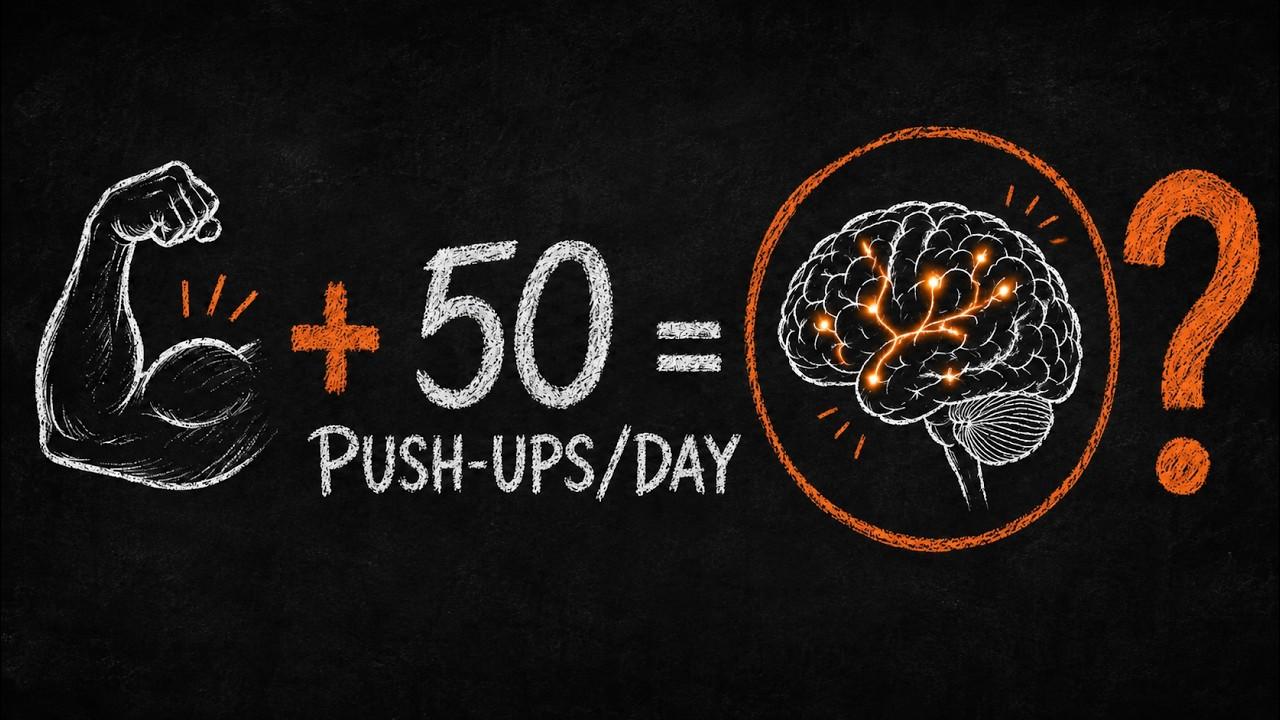
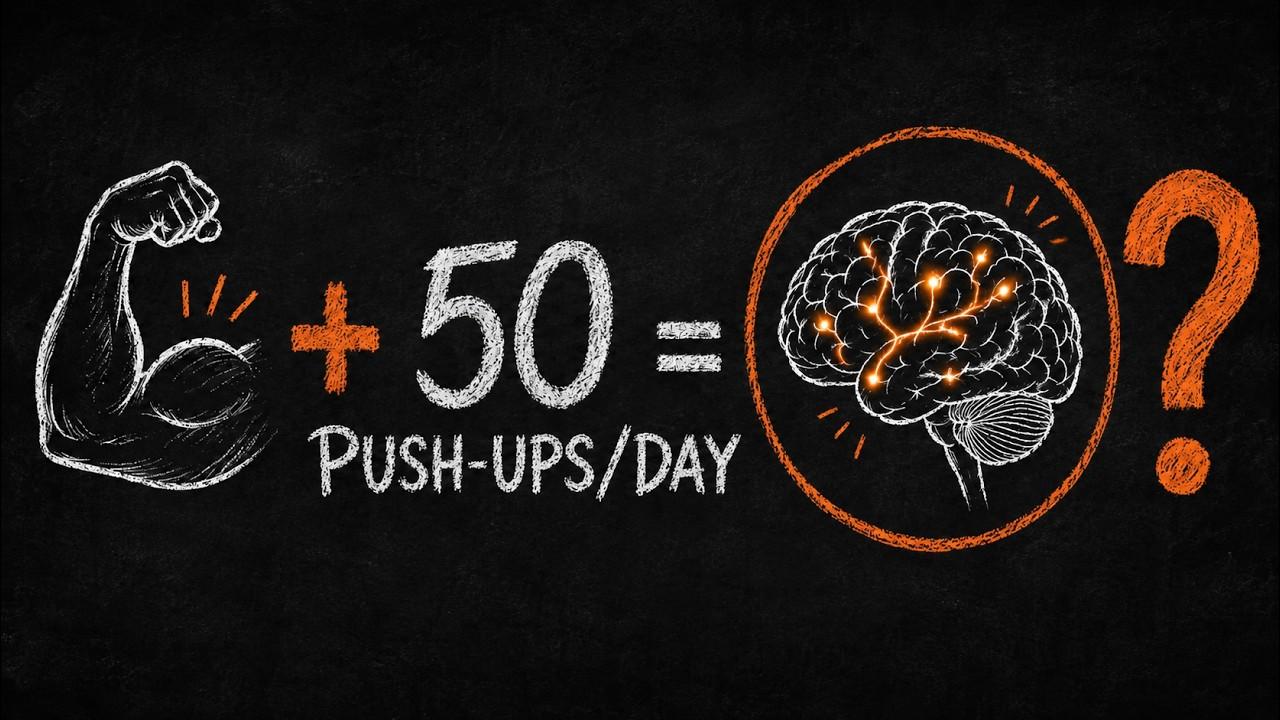
Can 50 push-ups a day protect your brain—or is 50 simply a memorable number? In this evidence-based video, I examine what push-ups and resistance training may genuinely do for cognitive function, brain ageing and long-term independence—and where the evidence stops.
I’m Alex Paluzzi, a neurosurgeon. I explain three distinctions that matter: push-up capacity as a marker of fitness, push-ups as a training intervention, and clinical outcomes such as dementia, stroke or depression. We examine meta-analyses of resistance training and executive function, studies of functional and structural brain change, recent research using brain-age models, and the vascular, metabolic and biochemical signals connecting contracting muscle with the brain.
I then set out a practical three-step protocol: choose a push-up variation that allows approximately 6–15 controlled repetitions; train two or three sets on two non-consecutive days each week and progress gradually; then add pulling, leg and aerobic exercise to create a balanced programme.
The conclusion is less dramatic than many internet promises, but more useful. There is no convincing evidence that 50 daily push-ups represent a magic neurological prescription or prevent dementia. Push-ups can, however, provide an efficient, scalable and convenient entry point into progressive resistance training—which may support executive function, physical independence and healthier brain ageing as part of a broader exercise programme.
This is The Moving Brain: real neuroscience to listen to while you walk, run or train.
This video is for general education and does not replace individual medical or exercise advice. Seek professional guidance if you have cardiovascular disease, significant joint problems or symptoms during exercise.
00:00 Can 50 push-ups protect your brain?
00:45 Why strength matters to a neurosurgeon
01:50 Cardio is not the whole story
02:48 Marker, intervention and clinical outcome
04:02 What does a push-up actually train?
04:54 Is 50 the magic number?
05:32 Push-up capacity and cardiovascular risk
06:48 Resistance training and cognition
08:31 Why the brain needs cardio plus strength
09:25 Can strength training change the physical brain?
12:24 Three pathways connecting muscle and brain
15:58 The three-step push-up protocol
16:20 Step 1: Choose the correct variation
17:06 Step 2: Train, recover and progress
18:20 Step 3: Complete the whole-body programme
19:15 Strength, independence and long-term prevention
20:51 The verdict: Do 50 push-ups protect your brain?
21:57 Your six-week push-up challenge
#PushUps #StrengthTraining #BrainHealth
#ResistanceTraining #Neuroscience #BrainLongevity #HealthyAging #CognitiveHealth #ExecutiveFunction #ExerciseScience #FitnessOver40 #TheMovingBrain
References
Landrigan J-F, Bell T, Crowe M, Clay OJ, Mirman D. Lifting cognition: a meta-analysis of effects of resistance exercise on cognition. Psychological Research. 2020;84:1167–1183. Full text/DOI
Herold F, Törpel A, Schega L, Müller NG. Functional and/or structural brain changes in response to resistance exercises and resistance training lead to cognitive improvements: a systematic review. European Review of Aging and Physical Activity. 2019;16:10. Full text/DOI
Gonzalez-Gomez R, Demnitz N, Coronel C, et al. Randomized controlled trial of resistance exercise and brain aging clocks. GeroScience. 2026;48:3251–3262. Full text/DOI
Logan N, Morgan AJ, Ross AM, Tsiamis E, Reavley NJ. Evaluating the Push-Up Challenge: impacts on mental health, help-seeking and exercise behaviours in Australia. Journal of Prevention. Published online 2025; print issue 2026;47:109–130. Full text/DOI
Pedersen BK. Physical activity and muscle-brain crosstalk. Nature Reviews Endocrinology. 2019;15:383–392. Full text/DOI
Zhang M, Fang W, Wang J. Effects of human concurrent aerobic and resistance training on cognitive health: a systematic review with meta-analysis. International Journal of Clinical and Health Psychology. 2025;25:100559. Full text/DOI
Dhahbi W, Briki W, Heissel A, et al. Physical activity to counter age-related cognitive decline: benefits of aerobic, resistance, and combined training—a narrative review. Sports Medicine—Open. 2025;11:56. Full text/DOI
Currier BS, D’Souza AC, Fiatarone Singh MA, et al. American College of Sports Medicine Position Stand: resistance training prescription for muscle function, hypertrophy, and physical performance in healthy adults—an overview of reviews. Medicine & Science in Sports & Exercise. 2026;58:851–872. PubMed
Bull FC, Al-Ansari SS, Biddle S, et al. World Health Organization 2020 guidelines on physical activity and sedentary behaviour. British Journal of Sports Medicine. 2020;54:1451–1462. Full text/DOI
Yang J, Christophi CA, Farioli A, et al. Association between push-up exercise capacity and future cardiovascular events among active adult men. JAMA Network Open. 2019;2:e188341. Full text/DOI

Sean Thompson, MS, MPH, RD, LDN
Registered Dietitian, Nourish
“Based preloads can be a practical tool for bariatric patients who struggle with portion control,” says Sean Thompson, a Northampton-based dietitian with a 4.99-star rating across 385+ reviews. “But I always tell clients: the foundation is still protein-first meals and mindful eating. Think of the gelatin trick as training wheels, not the whole bike. And if you have kidney concerns, check with your doctor — excessive gelatin can be protein overkill.”
Sean specializes in accessible, evidence-based nutrition for individuals with disabilities and those navigating post-surgical diets. She holds dual master's degrees from Tufts University and approaches care without a weight-centric lens.
